


In an increasingly digital world, we are neglecting time-saving activities in our daily routines. For a few years now, we have seen how many Things have migrated from physical to digitalFor example, we now have music, books, courses, and something as important as money is not exempt. Because of this, the idea of digital currency was born, with the aim of eliminating the circulation in its maximum expression.
Thus, the Riksbank in Sweden has among its tasks, to promote and maintain an effective and secure payment system for all its users.. In this way, the The e-krona digital currency project began to take shape in 2017.It is estimated that ends in February 2021However, depending on the achievement of objectives, it could be extended for a longer period of time to achieve better development.
Initially, he e-krona would give the public access to a digital complement to cash, while protecting the currency's value. Currently, the Riksbank offers the digital currency to banks and other members of the Swedish payment system.
e-krona technology
So, The technical solution is based on a portable digital token that cannot be copied or falsified.. Enabling instant peer-to-peer payments as easily as sending a text message.
On the other hand, they will use a DLT (Distributed Ledger Technology) to keep third-party databases synchronizedIn this way, the network only validates valid transactions on each node. Each node receives, sends, validates, and stores e-kronas.
Meanwhile, The test is structured in two levelsOn the first level, the Riksbank will issue e-kronas to other banks. On the second level, these banks will distribute the digital currency to end users.
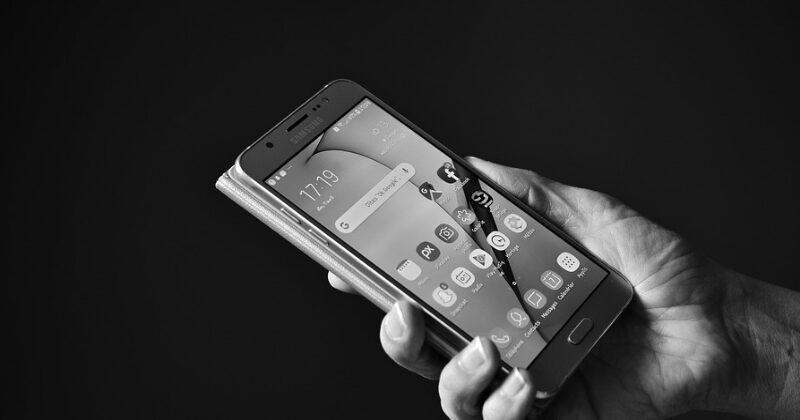
Hence, Each user, whether consumer or merchant, will control their digital currency through digital wallets., installed as an app on mobile devices or cash registers. It's worth noting that a program will be developed for watches, smart cards, and body chip implants. The aim is to incorporate the majority of devices used by users into the payment system.
One of the advantages of this e-krona digital currency is that its platform is private and only users approved by the Riksbank can access it. Furthermore, it doesn't consume as much energy as traditional cryptocurrencies. cryptocurrenciesRather, its consumption resembles traditional payment methods.
Digital or Virtual Currency, Digital Money and Cryptocurrency
When you look at other sources of information, they use these terms, practically making them one and the same. It's important to mention that each of them has a different use, so they apply to different cases.
To start the Digital money is any means of monetary exchange that is carried out electronically.. If we go further, virtually all money in the world is digital. Only about 8 or 9% is circulating paper money or coins. In Sweden, 13% of payments last year were made in cash, while 10 years ago, it was around 40%.
Virtual currency is that which exists only in digital format, for example in video games.Many of them offer a currency with which you can purchase items, potions, weapons, and more. Another example is stores that create their own currency, so by joining them you can also purchase their products.
Finally there are Cryptocurrencies are virtual currencies, but they do not have a specific issuer, nor are they centralized.. On the other hand, are protected with cryptography. In this way, it can be said that a cryptocurrency is a digital currency or money, but not vice versa.
Cryptocurrencies in other countries

Evidently, as the subtitle indicates, several countries have cryptocurrency projects, to be used as digital currencies.
We have in the Asian continent, to the India, where the central bank announced in 2018, then the project of the cryptorupee was put on hold. It is also Iran, plans to launch with PayMon to evade US sanctions. Another interested country is Dubai, what does he have in mind? emCash anchored to the Dirham.
On the other hand, it is Israel with its cryptocurrency shekel, being inspired by the e-kronaThe Asian giant of China, with its ups and downs regarding its opinion on crypto assets, is considering embarking on this technology.
In Oceania we find Marshall Islands, announced the future application of a cryptocurrency called Sovereign. Along with its other legal tender, the dollar.
On the European continent, apart from Sweden, it is also found Russia. That since 2017, there has been talk of cryptoruble, to evade sanctions from the European Union and the United States. Also inspired by the Swedes, there is Swiss, which studies the feasibility of implementing it e-franc or cryptofranc. On the other hand, France confirmed its pilot project for a cryptocurrency called Dune led by the private financial sector and supported by the central bank.
Finally we have Venezuela, which launched the Petro, as a cryptocurrency that was intended to be mined, has so far been used as a digital currency. Backed by oil, gold, coltan, diamonds, and gas to evade US sanctions.
Advantages of a digital currency
As we can see, central banks are just beginning to get excited about creating their own digital currencies. Each country will have a purpose, but one of the most important is decrease in cash. Just as the manufacturing cost of each banknote or coin.
These digital currency applications also have a great advantage in situations like the one we are experiencing with the Covid-19 pandemicBecause transactions would be conducted from mobile devices. Neither cash nor cards would be used, thus helping to prevent the spread of infections.
Now, for this reason and even more so in this increasingly automated world, cryptocurrencies and digital money seem here to stay. In this way, Sweden could revolutionize the global economy. What do you think about this type of money?
Image: Algoritmomag





 Español de Colombia
 English
 Português do Brasil